
 EN
EN
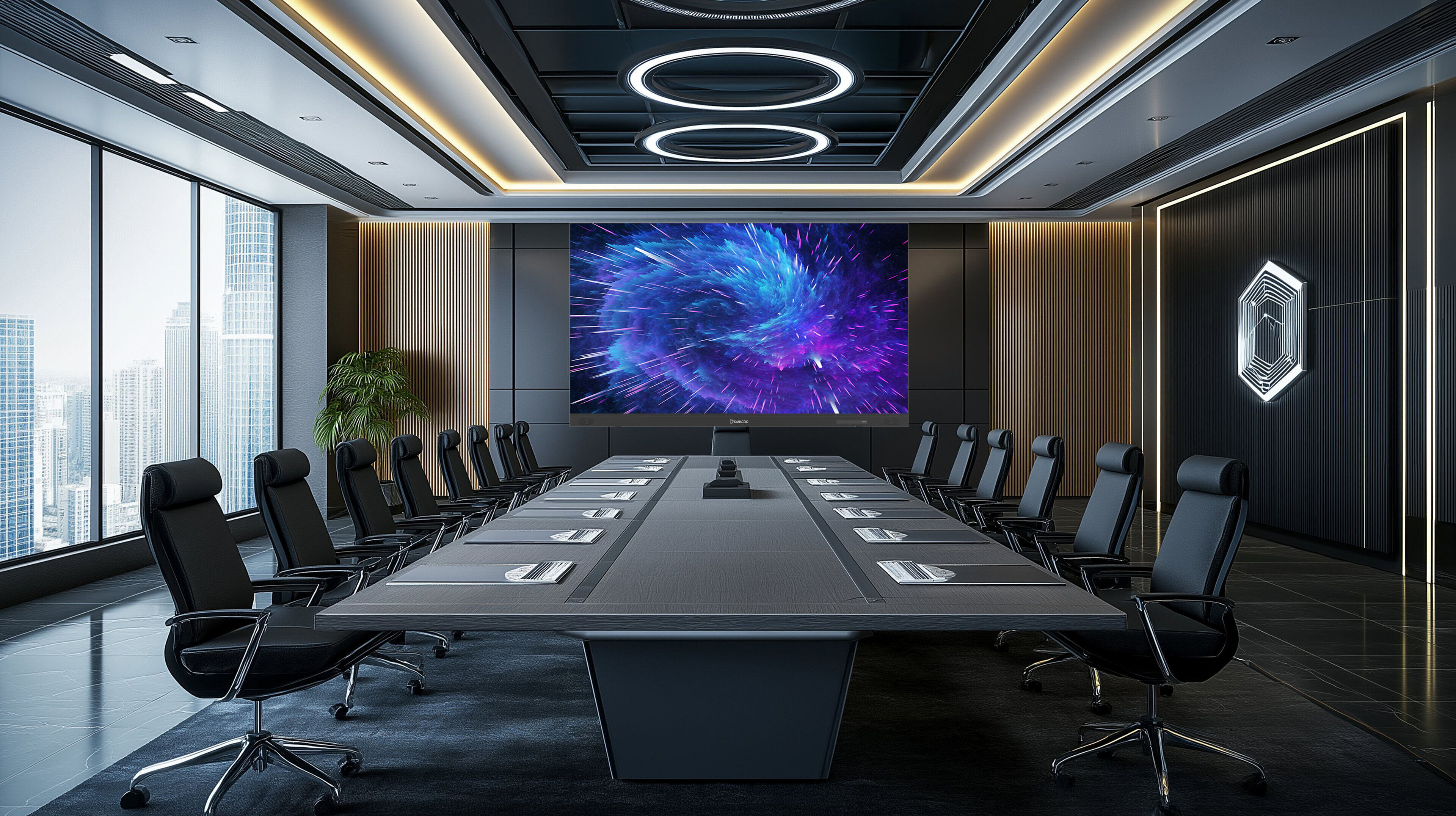
Achieving a true 4K or 8K visual experience on LED displays depends fundamentally on understanding pixel pitch and its relationship to resolution, viewing distance, and display size. While manufacturers often promote ultra-high-definition capabilities, the actual viewing experience is determined by how pixel pitch translates into visible image quality at practical distances. For applications ranging from corporate presentation spaces to educational environments and control rooms, the relationship between pixel pitch and resolution defines whether viewers perceive genuinely sharp 4K/8K imagery or simply see a grid of illuminated points that fail to blend into coherent visual information.
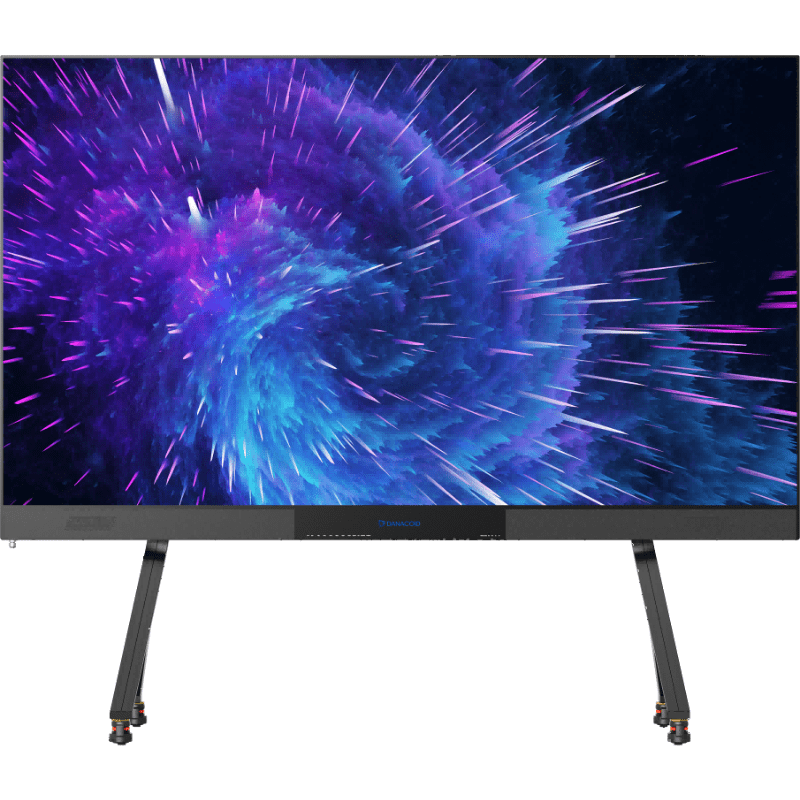
The technical specifications surrounding pixel pitch become particularly critical when organizations invest in LED technology expecting to deliver content at 4K or 8K resolutions. A common misconception involves confusing the input signal resolution with the perceived output quality, where even a display receiving an 8K signal may fail to reproduce the detail if the pixel pitch is too large relative to the screen dimensions. This article examines the mathematical relationships, optical principles, and practical considerations that determine when pixel pitch enables genuine ultra-high-definition experiences versus when it creates visual limitations that undermine content quality regardless of source resolution.
The Mathematical Foundation of Pixel Pitch and Resolution
Defining Pixel Pitch in Physical and Visual Terms
Pixel pitch represents the center-to-center distance between adjacent LED pixels, measured in millimeters. This measurement directly determines the pixel density across the display surface, establishing the maximum achievable resolution for any given screen size. A smaller pixel pitch value indicates tighter pixel spacing and higher density, which enables more pixels within the same physical area and consequently supports higher resolution content. For instance, a display with 1.2mm pixel pitch positions pixels much closer together than one with 2.5mm spacing, fundamentally altering the detail capacity of the screen.
The relationship between pixel pitch and total resolution follows a precise mathematical formula where horizontal resolution equals the display width in millimeters divided by the pixel pitch, and vertical resolution follows the same logic for height. To achieve true 4K resolution of 3840 by 2160 pixels, a display measuring 4608mm wide would require a pixel pitch of exactly 1.2mm. This calculation reveals why many LED displays marketed with 4K capabilities actually cannot reproduce full 4K detail despite accepting 4K input signals, as their pixel pitch is insufficient to represent all the information contained in the source content.
Resolution Density Requirements for 4K and 8K Standards
True 4K resolution demands 8,294,400 total pixels arranged in a 3840 by 2160 grid, while 8K requires 33,177,600 pixels in a 7680 by 4320 configuration. Achieving these pixel counts on LED displays of practical sizes necessitates very fine pixel pitch values that have only recently become commercially viable. For a standard large-format display measuring approximately 4 meters wide and maintaining 16:9 aspect ratio, delivering genuine 4K resolution requires pixel pitch around 1.04mm, while 8K demands approximately 0.52mm spacing between pixel centers.
These requirements explain why pixel pitch specifications below 1.0mm represent critical thresholds for ultra-high-definition applications. Displays with pixel pitch values of 1.5mm or 2.0mm, though often marketed as high-resolution solutions, cannot physically contain enough pixels to reproduce full 4K content on screens of typical conference room or classroom dimensions. The pixel pitch establishes an absolute ceiling on detail representation, meaning that feeding 4K content to a display with insufficient pixel density results in downsampling where multiple source pixels must map to single display pixels, effectively negating the resolution advantage of the source material.
Screen Size and Pixel Count Interdependencies
The interplay between pixel pitch, screen dimensions, and achievable resolution creates specific constraints for display selection. Larger screens require proportionally finer pixel pitch to maintain equivalent resolution, since the total pixel count must increase with screen area. A 100-inch diagonal display achieving 4K resolution needs significantly tighter pixel pitch than a 75-inch display targeting the same resolution, because the larger surface area must accommodate the same 8.3 million pixels within greater physical space.
This relationship becomes particularly important when organizations scale display sizes for auditorium or large conference applications. Doubling the screen diagonal quadruples the surface area, requiring pixel pitch to decrease by half to maintain the same resolution density. For example, if a 2-meter-wide display requires 1.0mm pixel pitch for 4K resolution, a 4-meter-wide display would need 0.5mm pixel pitch to deliver equivalent pixel density. These physical constraints mean that achieving true 8K experiences on very large LED walls demands sub-millimeter pixel pitch technologies that represent the current frontier of manufacturing capabilities and come with substantially higher cost implications.
Optical Perception and Viewing Distance Considerations
The Visual Acuity Threshold and Pixel Visibility
Human visual acuity determines the minimum distance at which individual pixels become indistinguishable and blend into continuous imagery. Standard vision with 20/20 acuity can resolve details separated by approximately one arcminute of visual angle, which translates to the ability to distinguish points separated by 0.3mm at a viewing distance of one meter. This physiological limitation means that pixel pitch must be considered relative to the expected viewing distance, as pixels spaced beyond the resolution limit of human vision at the intended distance will appear as discrete points rather than forming seamless images.
The practical guideline for determining appropriate pixel pitch based on viewing distance uses a ratio where optimal viewing distance in meters approximately equals pixel pitch in millimeters. Under this formula, a display with 2.0mm pixel pitch achieves visual blending at distances beyond 2 meters, while 1.0mm pixel pitch enables comfortable viewing from 1 meter away. For true 4K or 8K experiences where viewers perceive the full resolution benefit, the viewing distance must be close enough that the eye can distinguish the detail enabled by the fine pixel pitch, yet far enough that individual pixels merge into continuous imagery without visible grid structure.
Effective Resolution Versus Native Resolution
The concept of effective resolution recognizes that perceived image quality depends on the combination of native display resolution and viewing distance. A display with native 4K resolution delivers effective 4K quality only when viewed from distances where the eye can actually resolve differences between adjacent pixels. At distances where pixel pitch exceeds visual resolution limits, viewers cannot distinguish individual pixels, and the effective resolution perceived may be substantially lower than the native pixel count suggests.
This phenomenon explains why pixel pitch calculations must account for application-specific viewing scenarios. In a control room where operators sit 1.5 meters from displays, pixel pitch of 0.9mm or finer becomes necessary for perceiving 4K detail, as coarser spacing would place individual pixels within visible range, creating a grid effect that degrades image quality. Conversely, in an auditorium where the closest viewers sit 5 meters away, pixel pitch of 2.0mm may suffice for seamless imagery, though it would not deliver true 4K resolution across the full screen dimensions. Understanding this distinction prevents over-specification in applications where viewing distance naturally limits perceptible detail, while ensuring adequate pixel density in near-viewing scenarios.
Color Uniformity and Subpixel Architecture
Beyond simple pixel count, achieving genuine 4K and 8K visual quality requires examining how pixel pitch affects color reproduction and uniformity. Each LED pixel comprises red, green, and blue subpixels that combine to produce the full color spectrum, and the physical spacing between these subpixels influences color blending and apparent color accuracy. Finer pixel pitch brings subpixels closer together, improving color mixing and reducing the visibility of individual color components, which becomes particularly important for reproducing subtle gradations and avoiding color fringing in high-contrast edges.
Advanced LED technologies such as chip-on-board designs minimize the spacing between subpixels within each pixel, enhancing color uniformity even at close viewing distances. This architectural consideration becomes critical when pixel pitch drops below 1.0mm for 4K and 8K applications, as the proximity of viewing necessary to appreciate ultra-high resolution also makes subpixel structure more visible if not properly managed. Displays targeting true 4K experiences must therefore consider not only the millimeter measurement of pixel pitch but also the subpixel arrangement and color mixing distance, ensuring that the color presentation matches the detail capability implied by the fine pixel spacing.
Technical Implementation Challenges for Ultra-High-Definition LED Displays
Manufacturing Precision Requirements
Producing LED displays with pixel pitch fine enough for true 4K and 8K resolution introduces substantial manufacturing challenges that affect both product availability and cost structure. Achieving consistent 0.9mm or 0.6mm pixel pitch across large display panels requires extreme precision in component placement, as even fractional millimeter variations accumulate across thousands of pixels to create visible alignment issues. The tight tolerances demand advanced automated assembly processes and rigorous quality control, since manual placement becomes impractical when positioning tens of thousands of microscopic LED packages with sub-millimeter spacing.
Heat management also becomes more complex as pixel pitch decreases, because packing more LED components into the same surface area increases power density and thermal load. Fine-pitch displays must incorporate sophisticated thermal dissipation designs to prevent localized heating that could affect LED performance and longevity. These thermal considerations influence the overall display architecture, often requiring integration of advanced cooling systems that add to the physical depth and operational requirements of ultra-high-definition LED installations. The cumulative effect of these manufacturing demands explains why displays with pixel pitch below 1.0mm typically command premium pricing compared to coarser-pitch alternatives.
Signal Processing and Bandwidth Requirements
Delivering genuine 4K and 8K content to fine-pitch LED displays requires signal processing infrastructure capable of handling the massive data throughput that ultra-high resolutions demand. A 4K signal at 60 frames per second with 10-bit color depth requires bandwidth exceeding 18 gigabits per second, while 8K at similar specifications demands over 70 gigabits per second. The video processing electronics within LED display systems must not only receive these signals but also map them appropriately to the native pixel arrangement, maintaining image quality through scaling and refresh operations.
Pixel pitch interacts with signal processing in determining whether a display can effectively utilize high-resolution inputs. If the native pixel count determined by pixel pitch and screen dimensions falls short of the input resolution, the processing system must downscale the content, selectively discarding information to match the available pixels. This downscaling introduces potential quality degradation including aliasing artifacts and loss of fine detail, particularly in text and line graphics. Conversely, when native resolution exceeds input resolution, upscaling algorithms attempt to interpolate additional detail, but cannot genuinely recover information not present in the source. These processing realities underscore why matching pixel pitch to intended content resolution represents a critical specification decision rather than a mere technical detail.
Calibration and Color Consistency Across Fine-Pitch Arrays
Maintaining consistent brightness and color across thousands or millions of individual LED pixels becomes increasingly challenging as pixel pitch decreases for 4K and 8K applications. Manufacturing variations in LED components mean that individual pixels may exhibit slight differences in output characteristics, and these variations become more visually apparent when pixels are densely packed and viewed from close distances. Professional ultra-high-definition displays require sophisticated per-pixel calibration systems that measure and compensate for these variations, adjusting drive currents to achieve uniform appearance across the entire screen surface.
The calibration process for fine-pitch displays must account for viewing angle dependencies, as LED output characteristics can vary with observation angle, potentially creating brightness or color shifts when viewers move relative to the screen. Advanced calibration systems measure display performance from multiple angles and viewing distances, applying corrections that optimize appearance for the expected usage pattern. These calibration requirements represent ongoing maintenance considerations, as LED characteristics drift over operational lifetime, necessitating periodic recalibration to maintain the pristine image quality expected from premium 4K and 8K installations. The sophistication of calibration capabilities therefore becomes a distinguishing factor in displays claiming true ultra-high-definition performance.
Application-Specific Pixel Pitch Selection for 4K and 8K Experiences
Corporate Presentation and Conference Room Environments
Corporate meeting spaces typically involve viewing distances between 2 and 5 meters, with screen sizes ranging from 100 to 200 inches diagonal. For true 4K visual experiences in these settings, pixel pitch between 0.9mm and 1.5mm provides the optimal balance of resolution and viewing comfort. Closer spacing enables viewers to approach the display for detailed content examination while maintaining image cohesion, which proves valuable for applications involving architectural renderings, financial data visualization, and detailed product imagery where stakeholders may move closer to inspect specific elements.
The selection process should consider the primary content types and interaction patterns expected in the space. Environments emphasizing video conferencing and presentation slides can often function effectively with pixel pitch toward the coarser end of the recommended range, as these content types contain less fine detail than technical drawings or high-resolution photographs. However, organizations positioning conference spaces as multipurpose venues for both presentations and detailed collaborative work benefit from pixel pitch below 1.2mm, ensuring that 4K source content displays with perceptible quality advantages over standard HD alternatives. The investment in finer pixel pitch becomes particularly justified when the space serves executive functions or customer-facing purposes where visual quality contributes to organizational image.
Educational Institutions and Training Facilities
Educational applications present unique pixel pitch considerations because viewing distances vary significantly within typical classroom and lecture hall configurations. Front-row students may sit 2 meters from displays, while back-row participants might be 10 meters distant, creating challenges in selecting pixel pitch that serves the full audience effectively. For genuine 4K educational experiences, pixel pitch between 1.0mm and 1.8mm generally provides appropriate compromise, delivering detailed imagery for near viewers while maintaining coherent appearance for distant observers.
Subject matter significantly influences optimal pixel pitch selection in educational contexts. Science and medical programs displaying detailed anatomical imagery, molecular structures, or microscopy content benefit substantially from pixel pitch below 1.2mm, as these disciplines require students to perceive fine structural details that justify 4K resolution investments. Liberal arts and business programs emphasizing text-based presentations and standard video content may find adequate quality with pixel pitch up to 2.0mm, particularly in larger lecture halls where minimum viewing distance naturally exceeds 3 meters. The decision framework should weigh the pedagogical value of enhanced visual detail against budgetary constraints, recognizing that pixel pitch directly correlates with total system cost.
Control Rooms and Mission-Critical Monitoring Applications
Control room operators typically work within 1 to 2 meters of display surfaces for extended periods, making these environments among the most demanding for pixel pitch specifications. True 4K experiences in control applications require pixel pitch of 0.9mm or finer, as operators must perceive detailed information within complex data visualizations, geographic information systems, and multiple simultaneous video feeds without eye strain from visible pixel structure. The extended viewing duration characteristic of control room operations amplifies the importance of seamless imagery, as pixel grid visibility contributes to visual fatigue during long shifts.
Control room applications also prioritize pixel pitch consistency and uniformity across large video wall installations spanning multiple display modules. Variations in pixel pitch between modules create visible seams and alignment issues that disrupt the continuous visual field essential for map displays and large-format data representations. Achieving 8K resolution across control room video walls demands pixel pitch approaching 0.5mm, which represents current technological limits and requires careful evaluation of whether the operational benefits justify the substantial cost premium. Organizations should assess whether their monitoring tasks genuinely require 8K detail or whether 4K resolution with 0.9mm to 1.0mm pixel pitch provides sufficient information density for effective decision-making.
Digital Signage and Retail Display Applications
Retail and public signage environments typically involve viewing distances exceeding 3 meters, allowing for coarser pixel pitch while still achieving effective 4K visual quality. For these applications, pixel pitch between 1.5mm and 2.5mm often suffices, as viewers rarely approach close enough to distinguish individual pixels, and the content primarily consists of marketing imagery and video designed for impact rather than detailed examination. The economic advantages of coarser pixel pitch become particularly relevant in signage applications where display size takes priority over ultra-high resolution, enabling larger installations within budget constraints.
However, premium retail environments and flagship stores increasingly adopt finer pixel pitch displays to differentiate their brand presentation and enable novel content approaches. Pixel pitch below 1.2mm allows retailers to display product detail imagery that invites closer inspection, creating opportunities for interactive experiences where customers can approach displays to examine product textures, color variations, and fine features. These applications blur the boundary between signage and product visualization, justifying investments in true 4K resolution through enhanced customer engagement and perceived brand quality. The selection criteria should therefore consider both the typical viewing distance and the strategic role of the display in the retail experience.
Future Trajectories in Pixel Pitch Technology and Ultra-High-Definition Displays
Emerging Manufacturing Technologies Enabling Sub-Millimeter Pixel Pitch
Advances in LED packaging and assembly technologies continue pushing pixel pitch capabilities toward the sub-millimeter range necessary for large-format 8K displays. Chip-on-board manufacturing approaches integrate LED dies directly onto circuit boards without intermediate packaging, eliminating spacing waste and enabling pixel pitch below 0.6mm with improved thermal performance and color uniformity. These manufacturing innovations make genuine 8K experiences increasingly practical for applications beyond specialized installations, gradually expanding the market segment where ultra-high resolution delivers perceptible advantages over 4K alternatives.
MicroLED technologies represent the next frontier in pixel pitch reduction, utilizing LED elements measuring less than 50 microns that theoretically enable pixel pitch below 0.3mm. At these densities, LED displays approach the pixel pitch capabilities of OLED and LCD technologies while retaining the brightness and longevity advantages characteristic of LED architectures. The transition to microLED manufacturing remains constrained by mass transfer challenges in reliably placing millions of microscopic components, but ongoing development efforts suggest that these obstacles may resolve within the next several years, fundamentally altering the landscape of ultra-high-definition display options and their cost structures.
Content Ecosystem Development for 8K Display Technologies
The practical value of investing in pixel pitch fine enough for 8K resolution depends substantially on the availability of native 8K content, which currently remains limited outside specialized production and scientific applications. Consumer video streaming services and broadcast standards predominantly target 4K resolution, creating a content availability gap that may persist for years before 8K becomes mainstream. Organizations evaluating sub-millimeter pixel pitch displays for 8K capabilities should therefore assess whether their specific content sources justify the resolution investment or whether current content ecosystems make 4K-capable displays the more pragmatic choice.
However, certain professional applications generate native 8K content internally, making the resolution immediately valuable regardless of commercial content availability. Medical imaging, geospatial analysis, engineering visualization, and security surveillance increasingly produce 8K and higher resolution source material where displaying the full native detail provides operational benefits. For these applications, pixel pitch specifications targeting genuine 8K reproduction deliver tangible returns by enabling practitioners to perceive details present in their source data. The investment calculus should therefore distinguish between applications dependent on external content and those generating high-resolution material internally as part of their operational workflows.
Integration with Emerging Display Technologies and Hybrid Approaches
The evolution of pixel pitch capabilities occurs alongside developments in complementary display technologies, creating opportunities for hybrid approaches that optimize different performance characteristics. Direct-view LED displays with fine pixel pitch increasingly compete with rear-projection systems and LCD video walls in applications traditionally dominated by those technologies, as improvements in pixel pitch close the resolution gap while maintaining LED advantages in brightness and operational lifespan. The competitive dynamics shift the decision criteria from categorical technology choices toward performance-based selections weighing pixel pitch, contrast ratio, ambient light handling, and total cost of ownership.
Future display architectures may also incorporate variable pixel pitch across single installations, using finer spacing in central viewing zones where operators focus attention while employing coarser pitch in peripheral areas. This approach optimizes the cost-performance balance by allocating ultra-high resolution only where viewing patterns justify the investment, much as foveal vision concentrates human visual acuity in the central field. While current manufacturing approaches create uniform pixel pitch across modules, advancing design tools and modular architectures may enable economically viable implementations of graduated pixel pitch that deliver perceived 4K or 8K experiences across large installations at reduced total cost compared to uniform fine-pitch implementations.
FAQ
What pixel pitch is needed for a true 4K experience on LED displays?
Achieving true 4K resolution requires pixel pitch calculated by dividing display dimensions by 3840 pixels horizontally and 2160 vertically. For typical large-format displays between 3 and 5 meters wide, this translates to pixel pitch between 0.78mm and 1.3mm. However, the viewing distance also matters, as pixel pitch must be fine enough that individual pixels blend visually at the intended viewing range. For conference rooms with 2 to 4 meter viewing distances, pixel pitch between 0.9mm and 1.2mm provides optimal 4K experiences by delivering both sufficient pixel count and appropriate viewing distance characteristics.
Can LED displays with larger pixel pitch display 4K content effectively?
LED displays with pixel pitch larger than required for native 4K resolution can accept 4K input signals but cannot display the full detail contained in that content. When pixel pitch is too large relative to screen dimensions, the display has fewer physical pixels than the 4K signal provides, forcing the video processor to downscale the content. This results in lost detail and effectively delivers lower-than-4K visual quality despite receiving a 4K source signal. The display will show an image, but viewers will not perceive the sharpness and detail advantages that characterize true 4K experiences, particularly when viewing detailed content such as text, fine graphics, or high-resolution photographs.
How does viewing distance affect pixel pitch requirements for 4K and 8K displays?
Viewing distance determines the minimum pixel pitch at which individual pixels become visually indistinguishable and blend into continuous imagery. A practical guideline suggests that comfortable viewing distance in meters should approximately equal or exceed pixel pitch in millimeters. For true 4K or 8K experiences, viewers must sit close enough to perceive the resolution detail, yet far enough that pixel structure remains invisible. In applications where minimum viewing distance exceeds 4 meters, pixel pitch coarser than 2.0mm may still provide seamless imagery, though it would not deliver full 4K native resolution. Conversely, control rooms and near-viewing applications require pixel pitch below 1.0mm to avoid visible pixel grid at typical working distances.
What factors beyond pixel pitch affect the quality of 4K and 8K LED display experiences?
While pixel pitch establishes the resolution ceiling, several other factors significantly influence perceived 4K and 8K quality. Brightness uniformity across the display surface ensures consistent image appearance without visible variations between modules or screen regions. Color accuracy and calibration determine whether the display reproduces content as intended by creators, particularly important for professional applications. Contrast ratio affects the perceived depth and richness of imagery, especially in environments with variable ambient lighting. Refresh rate and response time influence motion handling for video content, while viewing angle characteristics determine whether image quality maintains consistency for viewers positioned off-axis. Comprehensive 4K and 8K experiences require optimization of all these factors in addition to appropriate pixel pitch selection.
Table of Contents
- The Mathematical Foundation of Pixel Pitch and Resolution
- Optical Perception and Viewing Distance Considerations
- Technical Implementation Challenges for Ultra-High-Definition LED Displays
- Application-Specific Pixel Pitch Selection for 4K and 8K Experiences
- Future Trajectories in Pixel Pitch Technology and Ultra-High-Definition Displays
-
FAQ
- What pixel pitch is needed for a true 4K experience on LED displays?
- Can LED displays with larger pixel pitch display 4K content effectively?
- How does viewing distance affect pixel pitch requirements for 4K and 8K displays?
- What factors beyond pixel pitch affect the quality of 4K and 8K LED display experiences?